Tag: Learning
-

Poetry: Representations
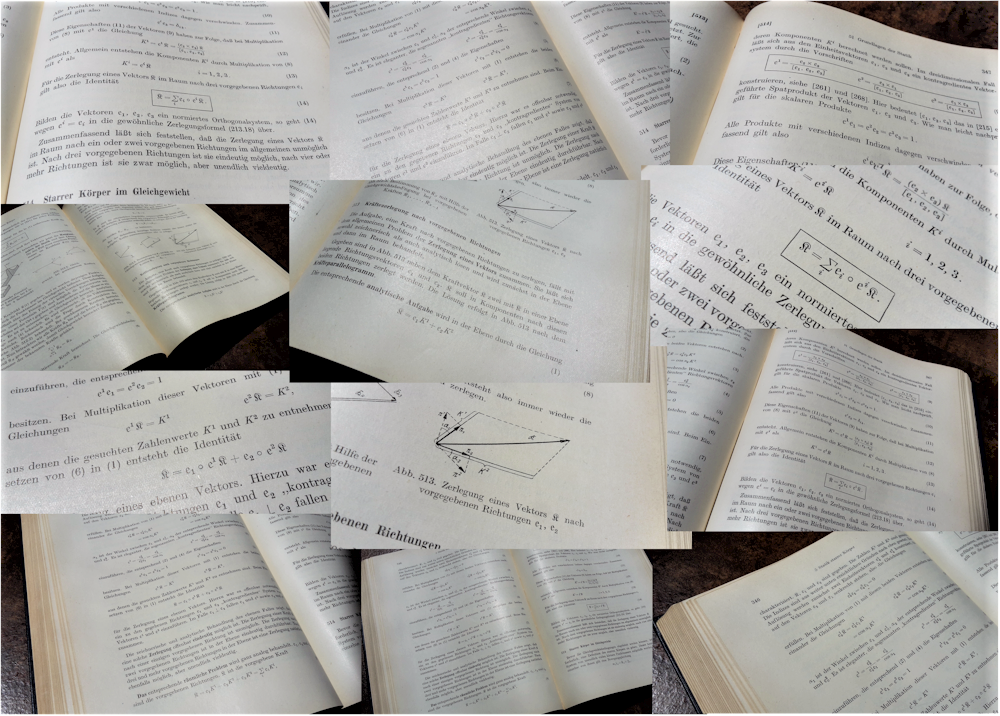
Finally, a revelation! I was asking myself: Why do I often find ancient, terse, illustration-free textbooks easier to follow than their modern, friendly, playful, illustrated, multi-media-enhanced counterparts? Case in point (and I know that not everybody will agree): Paul Dirac’s legendary Principles of Quantum Mechanics or the definitive course on theoretical physics, the volumes by…
-

Retention
“Retention” is the name I gave this painting, featuring the retention basin of our village: I am showing the paper still buckled from the water and the brushes still wet as I have just started learning watercolors more seriously. So, this is a “test”! In the next days I want to withdraw from the world,…
-
Remembering Prof. Wilhelm Macke
A recent migration of (some of my) domains made a link on Wikipedia go into the void of a 404. It was a brief, German article on another – now extinct – German website of mine, linked by the article on Wilhelm Macke. In order to keep it alive though, I am copying the article…
-
Circles to Circles
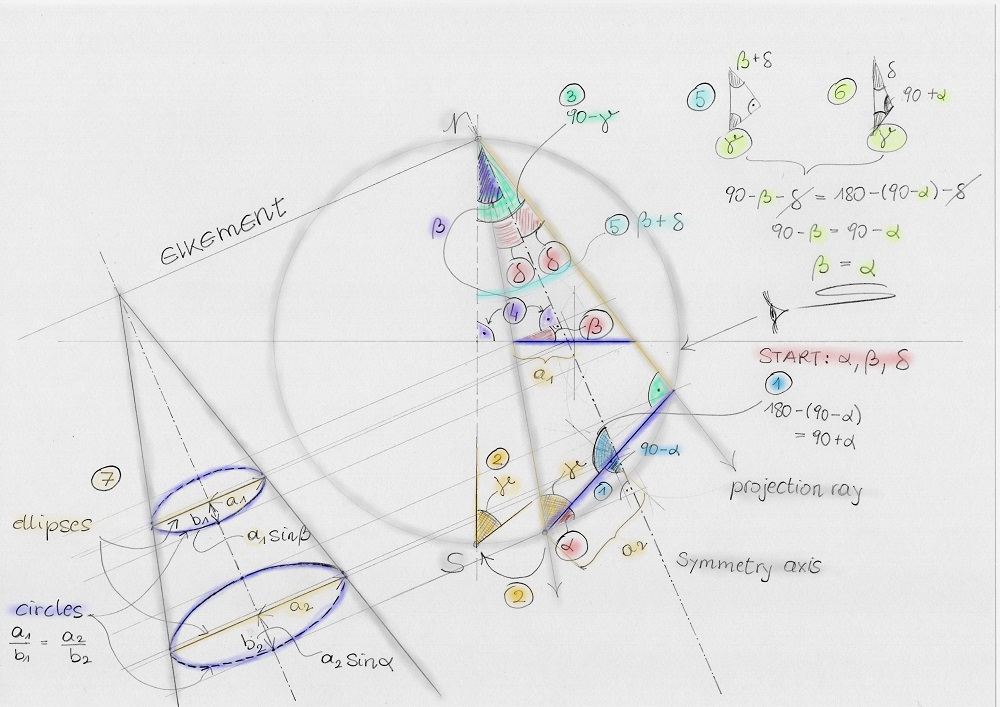
Using stereographic projection, you create a distorted image of the surface of a sphere, stretched out to cover an infinite plane. Each point on the sphere is mapped to a point in the equatorial plane by a projection ray starting at a pole of the sphere. Draw a circle on the sphere, e.g. by intersecting…
-

Peter M. Schuster on History of Science
The late Dr. Peter M. Schuster was a physicist and historian of science. After a career in industry, he founded a laser technology startup. Recovering from severe illness, he sold his company and became an author, science writer, and historian. He founded echophysics – the European Center for the History of Physics – in Pöllau…
-

Hacking
I am joining the ranks of self-proclaimed productivity experts: Do you feel distracted by social media? Do you feel that too much scrolling feeds transforms your mind – in a bad way? Solution: Go find an online platform that will put your mind in a different state. Go hacking on hackthebox.eu. I have been hacking…
-

Infinite Loop: Theory and Practice Revisited.
I’ve unlocked a new achievement as a blogger, or a new milestone as a life-form. As a dinosaur telling the same old stories over and over again. I started drafting a blog post, as I always do since a while: I do it in my mind only, twist and turn in for days or weeks…
-
Consequences of the Second Law of Thermodynamics
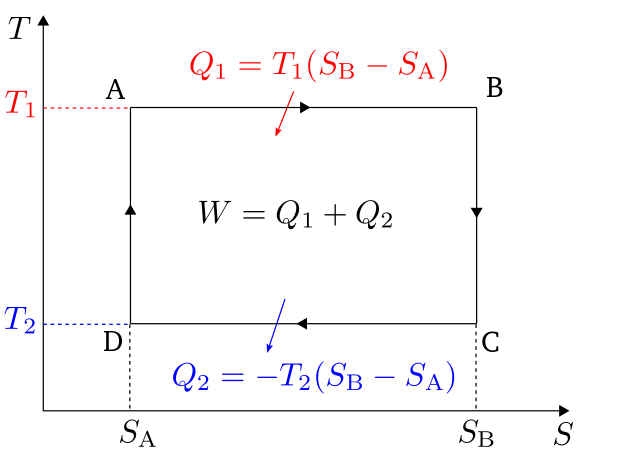
Why a Carnot process using a Van der Waals gas – or other fluid with uncommon equation of state – also runs at Carnot’s efficiency. Textbooks often refer to an ideal gas when introducing Carnot’s cycle – it’s easy to calculate heat energies and work in this case. Perhaps this might imply that not only must the…
-

Computers, Science, and History Thereof
I am reading three online resources in parallel – on the history and the basics of computing, computer science, software engineering, and the related culture and ‘philosophy’. An accidental combination I find most enjoyable. Joel on Software: Joel Spolsky’s blog – a collection of classic essays. What every developer needs to know about Unicode. New terms…
-

Ploughing Through Theoretical Physics Textbooks Is Therapeutic
And finally science confirms it, in a sense. Again and again, I’ve harping on this pet theory of mine: At the peak of my immersion in the so-called corporate world, as a super-busy bonus miles-collecting consultant, I turned to the only solace: Getting up (even) earlier, and starting to re-read all my old mathematics and…
-
Learning General Relativity
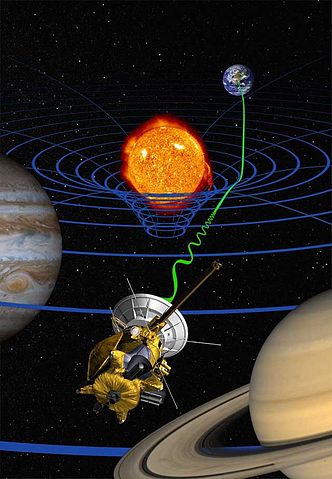
Math blogger Joseph Nebus does another A – Z series of posts, explaining technical terms in mathematics. He asked readers for their favorite pick of things to be covered in this series, and I came up with General Covariance. Which he laid out in this post – in his signature style, using neither equations nor…
-

Random Things I Have Learned from My Web Development Project
It’s nearly done (previous episode here). I have copied all the content from my personal websites, painstakingly disentangling snippets of different ‘posts’ that were physically contained in the same ‘web page’, re-assigning existing images to them, add[someuorvvng tags, consolidating information that was stored in different places. Raking the Virtual Zen Garden – again. (Voice from…
-

My Flat-File Database
A brief update on my web programming project. I have preferred to create online text by editing simple text files; so I only need a text editor and an FTP client as management tool. My ‘old’ personal and business web pages are currently created dynamically in the following way: [Code for including a script (including…
-
On Learning
Some years ago I was busy with projects that required a lot of travelling but I also needed to stay up-to-date with latest product features and technologies. When a new operating system was released a colleague asked how I could do that – without having time for attending trainings. Without giving that too much thought, and having my…
-

How to Introduce Special Relativity (Historical Detour)
I am just reading the volume titled Waves in my favorite series of ancient textbooks on Theoretical Physics by German physics professor Wilhelm Macke. I tried to resist the urge to write about seemingly random fields of physics, and probably weird ways of presenting them – but I can’t resist any longer. There are different…
-
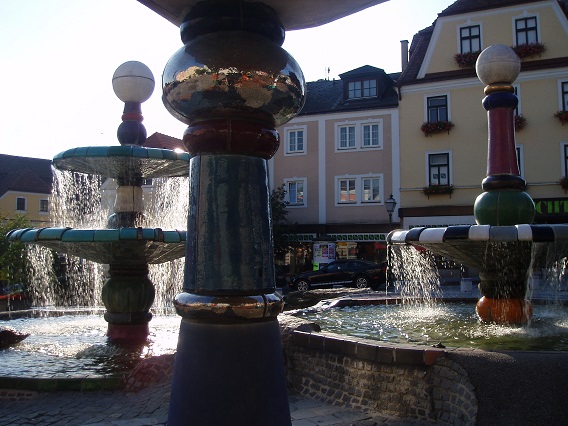
Non-Linear Art. (Should Actually Be: Random Thoughts on Fluid Dynamics)
In my favorite ancient classical mechanics textbook I found an unexpected statement. I think 1960s textbooks weren’t expected to be garnished with geek humor or philosophical references as much as seems to be the default today – therefore Feynman’s books were so refreshing. Natural phenomena featured by visual artists are typically those described by non-linear…
-

In Praise of Textbooks with Tons of Formulas (or: The Joy of Firefighting)
I know. I am repeating myself. Maurice Barry has not only recommended Kahneman’s Thinking, Fast and Slow to me, but he also runs an interesting series of posts on his eLearning blog. These got mixed and entangled in my mind, and I cannot help but returning to that pet topic of mine. First, some statistically…
-

“Student Friendly Quantum Field Theory”
As other authors of science blogs have pointed out: Most popular search terms are submitted by students. So I guess it is not the general public who is interested in: the theory of gyroscopes, (theory of) microwaves, (theory of) heat pumps, (theory of) falling slinkies, or the Coriolis force. I believe that these search terms…