Tag: Classical Mechanics
-

Geometry of the Motion of a Free Prolate Gyroscope (and the Power of Magnets)
How should I spin the story of the gyroscope this time? Imagine, you have a wonderfully crafted elongated ellipsoid from wood (shaped like a rugby ball). You built some apparatus that make it spin fast about its major axis. Probably you can make it spin with your bare hands – or you ask a tentacled…
-

Bumblebees and Ellipsoids (Poinsot’s Paper Spaceship #3)
In the movie Ice Age, Manny the Mammoth says he is not fat – just poofy! It is just the fur! I feel the same must be true for bumblebees – they are fluffy, but not really fat! And yes, these were the things going through my mind, when I created this geometric drawing: A…
-

Poinsot’s Paper Spaceship #0 – The Plan
There was a time before computer-based three-dimensional visualization. There was a time before any software at all. When James Clark Maxwell sculpted thermodynamic functions with clay. When Louis Poinsot described the motion of the gyroscope in terms of three cones embracing each other, boiling down the essence of a free spinning top’s motion. Today, we…
-

The Two Sides of Physics
Classical physics might not get its fair share of attention in contemporary science writing. But it can feel every bit as weird and awe-inspiring as so-called mysterious and spooky quantum mechanics! Statistical physics introduces you to spheres in trillions of dimensions whose volume is concentrated in a thin layer beneath their surfaces. Our intuition fails…
-
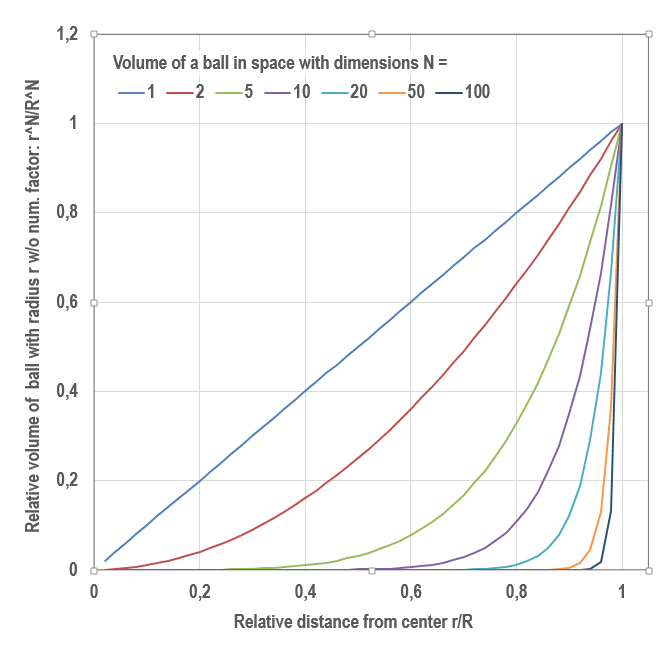
Spheres in a Space with Trillions of Dimensions
I don’t venture into speculative science writing – this is just about classical statistical mechanics; actually about a special mathematical aspect. It was one of the things I found particularly intriguing in my first encounters with statistical mechanics and thermodynamics a long time ago – a curious feature of volumes. I was mulling upon how…
-
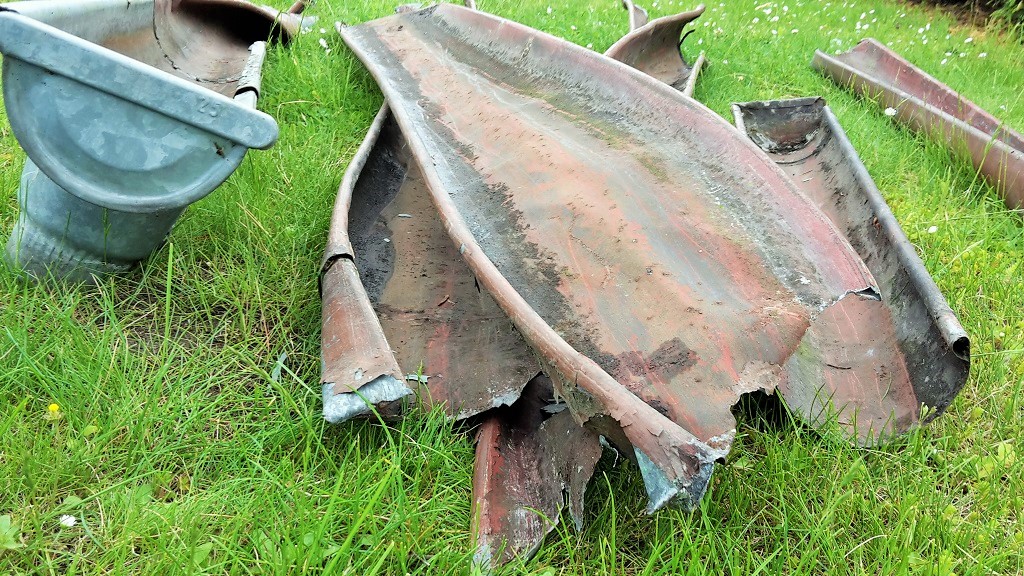
You Never Know
… when obscure knowledge comes in handy! You can dismantle an old gutter without efforts, and without any special tools: Just by gently setting it into twisted motion, effectively applying ~1Hz torsion waves that would lead to fatigue break within a few minutes. I knew my stint in steel research in the 1990s would finally…
-

Lest We Forget the Pioneer: Ottokar Tumlirz and His Early Demo of the Coriolis Effect
Two years ago I wrote an article about The Myth of the Toilet Flush, comparing the angular rotation caused by the earth’s rotation to the typical rotation in experiments with garden hoses that make it easy to observe the Coriolis effect. There are several orders of magnitude in difference, and the effect can only be…
-
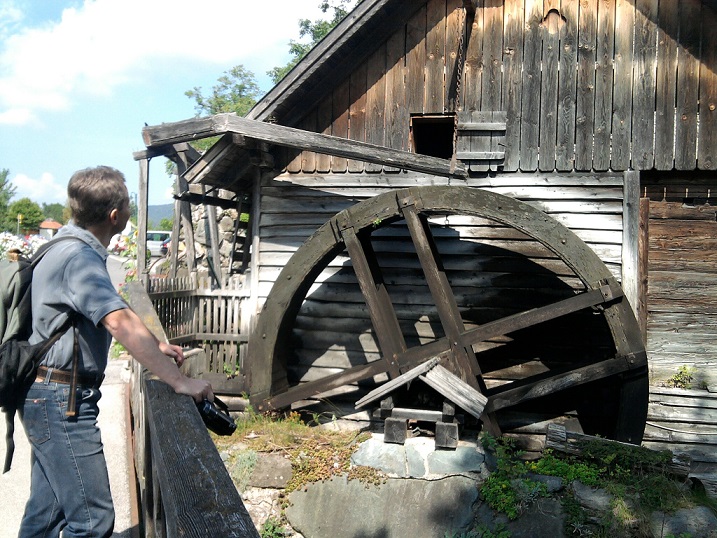
All Kinds of Turbines
I got an interesting question, related to the heat-from-the-tunnel project: Has anyone considered the fact that the water can be used to first drive turbines and then distributed to supply the input source for the heat pumps? I am a water turbine fan, and every time I spot a small hydro power plant on a…
-

Grim Reaper Does a Back-of-the-Envelope Calculation
I have a secondary super-villain identity. People on Google+ called me: Elke the Ripper or Master of the Scythe. [FAQ] No, I don’t lost a bet. We don’t have a lawn-mower by choice. Yes, we tried the alternatives including a reel lawn-mower. Yes, I really enjoy doing this. It is utterly exhausting – there is no…
-
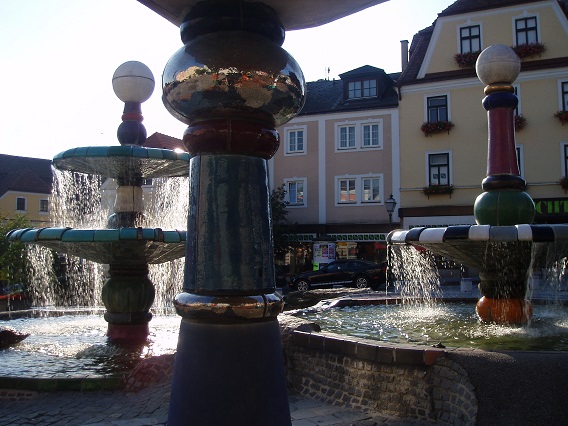
Non-Linear Art. (Should Actually Be: Random Thoughts on Fluid Dynamics)
In my favorite ancient classical mechanics textbook I found an unexpected statement. I think 1960s textbooks weren’t expected to be garnished with geek humor or philosophical references as much as seems to be the default today – therefore Feynman’s books were so refreshing. Natural phenomena featured by visual artists are typically those described by non-linear…
-

Mastering Geometry is a Lost Art
I am trying to learn Quantum Field Theory the hard way: Alone and from textbooks. But there is something harder than the abstract math of advanced quantum physics: You can aim at comprehending ancient texts on physics. If you are an accomplished physicist, chemist or engineer – try to understand Sadi Carnot’s reasoning that was…
-
Hyper-Jelly – Again. Why We Need Hyperspace – Even in Politics.
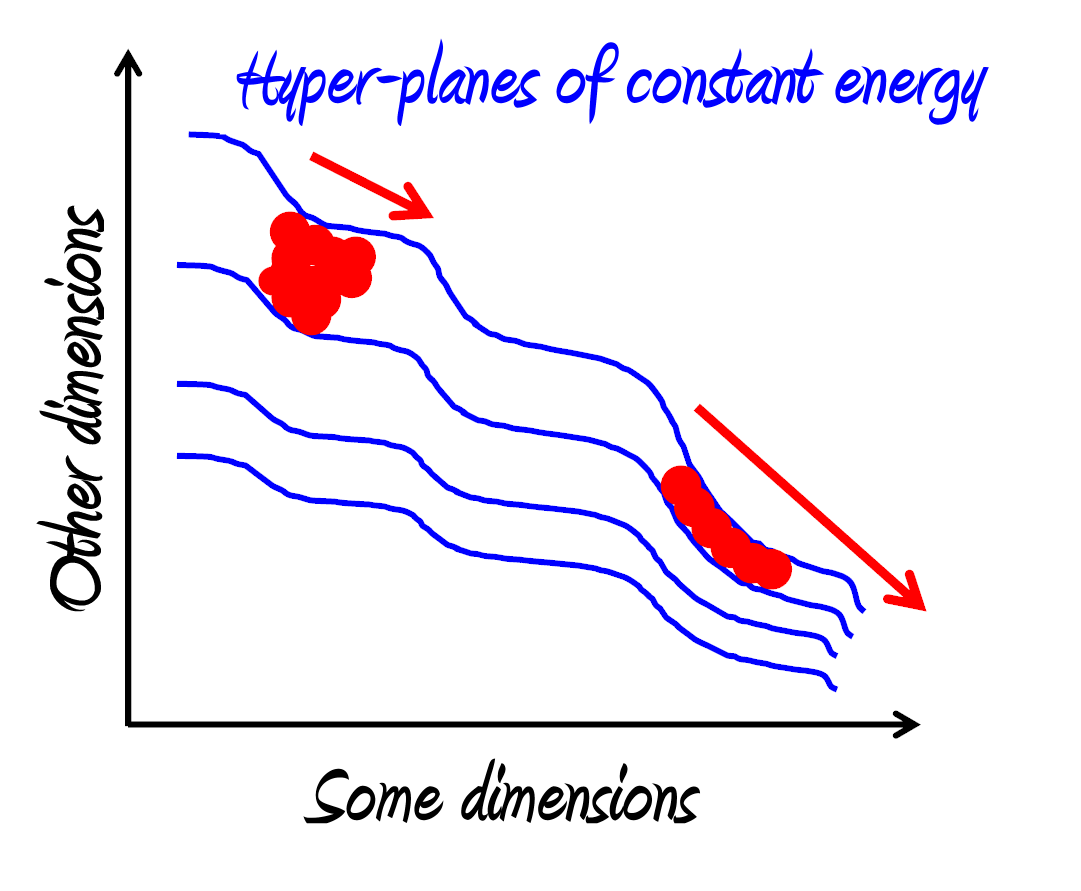
All of old. Nothing else ever. Ever tried. Ever failed. No matter. Try again. Fail again. Fail better. This is a quote from Worstward Ho by Samuel Beckett – a poem as impenetrable and opaque as my post on quantization. There is a version of Beckett’s poem with explanations, so I try again, too! I…
-

On the Relation of Jurassic Park and Alien Jelly Flowing through Hyperspace
Yes, this is a serious physics post – no. 3 in my series on Quantum Field Theory. I promised to explain what Quantization is. I will also argue – again – that classical mechanics is unjustly associated with steampunk pictures of clocks and trains. It looks more like representations of time-lines in Back to the…
-

Space Balls, Baywatch and the Geekiness of Classical Mechanics
This is the first post in my series about Quantum Field Theory. What a let-down: I will just discuss classical mechanics. There is a quantum mechanics, and in contrast there is good old classical, Newtonian mechanics. The latter is a limiting case of the former. So there is some correspondence between the two, and there are rules…
-

The Falling Slinky and Einstein’s Elevator
I have not known that this toy has a name at all. The ‘spring’ that can walk down the stairs is called Slinky! We all know how the Slinky walks – but how does it fall? This video might come as a surprise! The authoritative article on The Falling Slinky is this one: Modelling a…
-
The Twisted Garden Hose and the Myth of the Toilet Flush
If you have wrapped your head around why and how the U-shaped tube in the flow meter (described in my previous post) is twisted by the Coriolis force – here is a video of a simple experiment brought to my attention by the author of the quoted article on gyroscope physics: You could also test it…
-
Intuition and the Magic of the Gyroscope – Reloaded
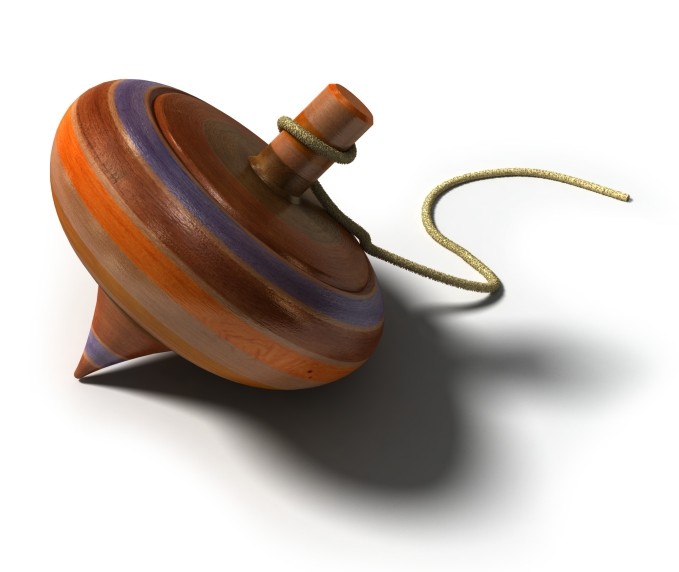
I am baffled by the fact that my article The Spinning Gyroscope and Intuition in Physics is the top article on this blog so far. So I believe I owe you, dear readers, an update. In the previous article I have summarized the textbook explanation, some more intuitive comments in Feynman’s Physics Lectures, and a new…
-

Physics / Math Puzzle: Where Is the Center of Mass?
On randomly searching for physics puzzles I have come across QuantumBoffin‘s site. The puzzle is about how to determine the center of mass of a body using the plumb line method, given there is some uncertainty due to experimental errors. You have found three plumb lines not intersecting in a single point; thus the three intersections of…